Marine veteran & family-owned
5.0 on Google (30 reviews)
You reach the owner directly
Free on-site estimates
The bid difference you cannot see
Two quotes for the same four-hundred-square-foot patio can be thousands of dollars apart, using the same pavers, in the same pattern. The difference is under the pavers.
North Texas clay swells and shrinks with moisture. A hardscape surface built on a shallow, poorly compacted base will pump fines down into the clay through those wet-dry cycles, lose support, and settle unevenly. It looks fine for a season or two. Then the joints open, the surface goes wavy, and there is no repair short of taking it up and starting again.
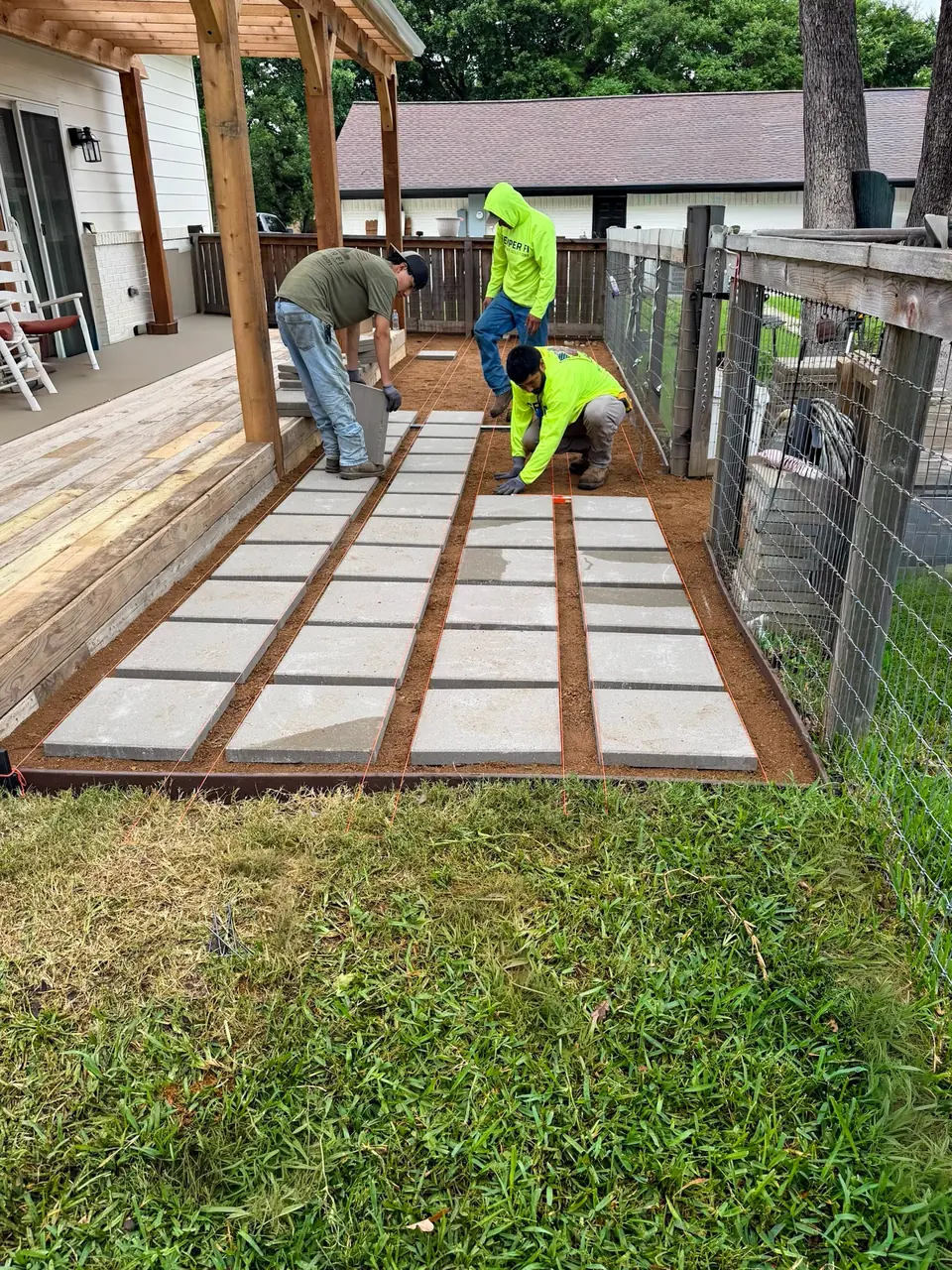
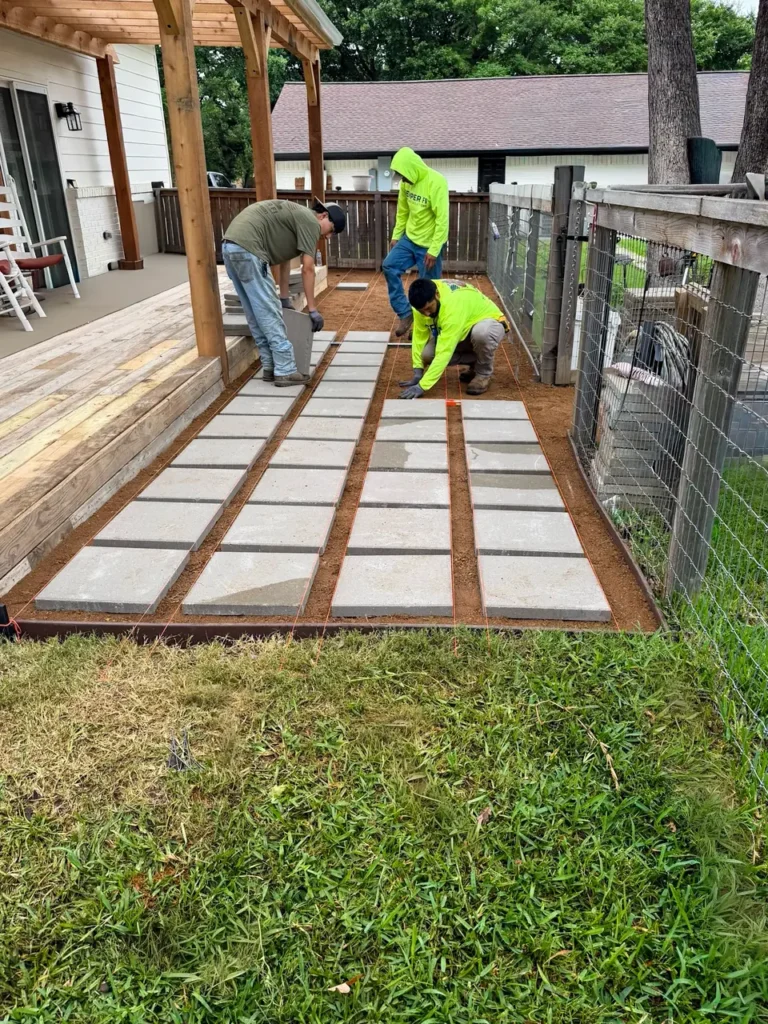
Building it properly here means a deeper compacted base than a national spec sheet calls for, proper compaction in lifts, a geotextile separation layer between base and subgrade so the two do not migrate into each other, and edge restraint that actually restrains.
None of that is visible in a photograph of a finished patio. All of it is the reason one still looks right in ten years.
Questions that separate the bids
Ask every hardscape bidder: how deep is the base, is it compacted in lifts, is geotextile fabric included between base and subgrade, what edge restraint, and how is drainage handled now that this surface no longer absorbs water. The answers will explain the price gap.
What we build
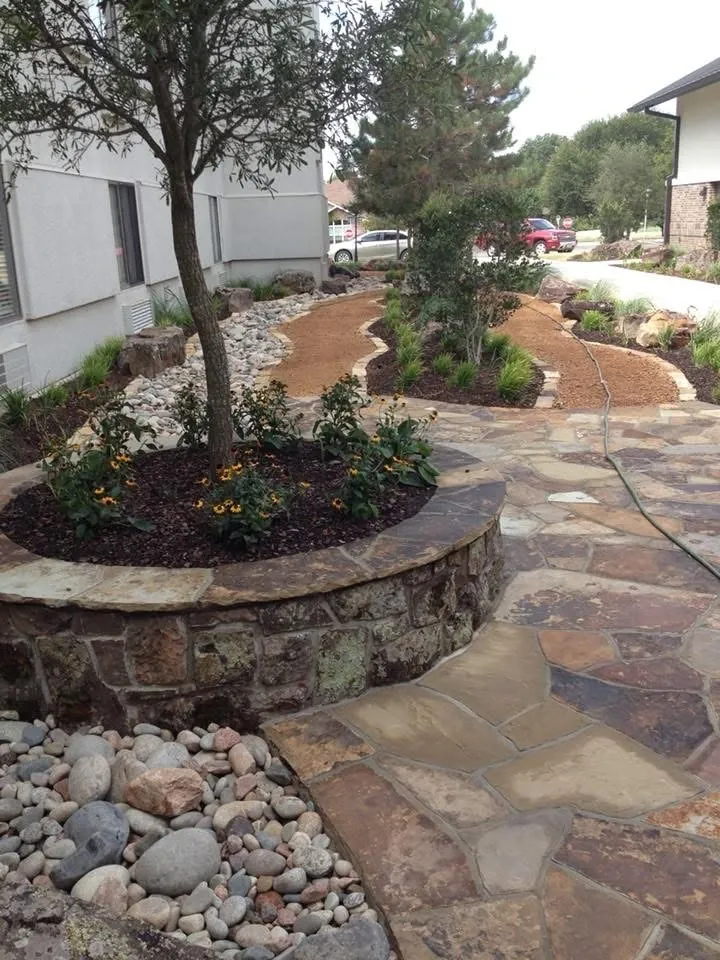
Paver and natural stone patios. Concrete pavers at the practical end, porcelain and natural stone, flagstone, travertine, bluestone, where the budget and the house call for it.
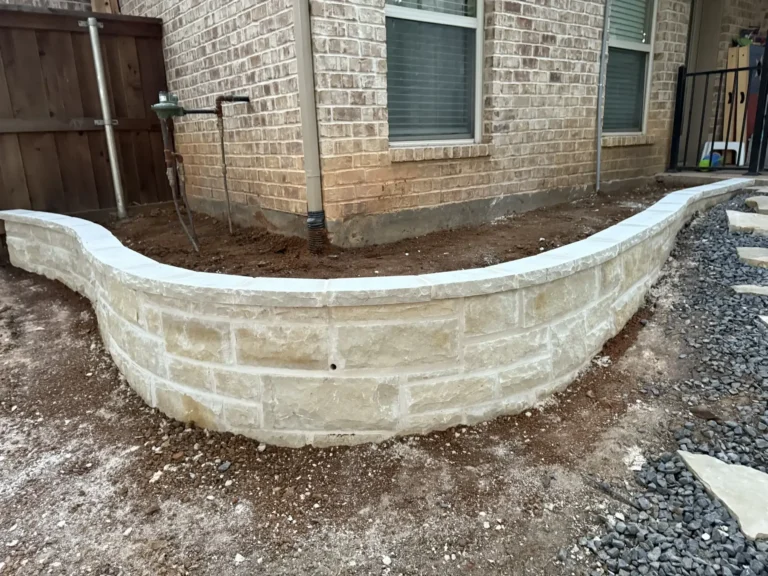
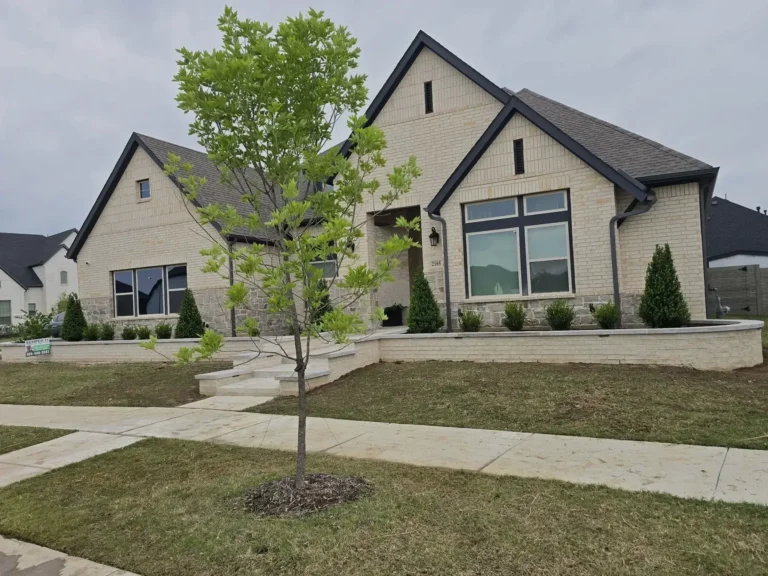
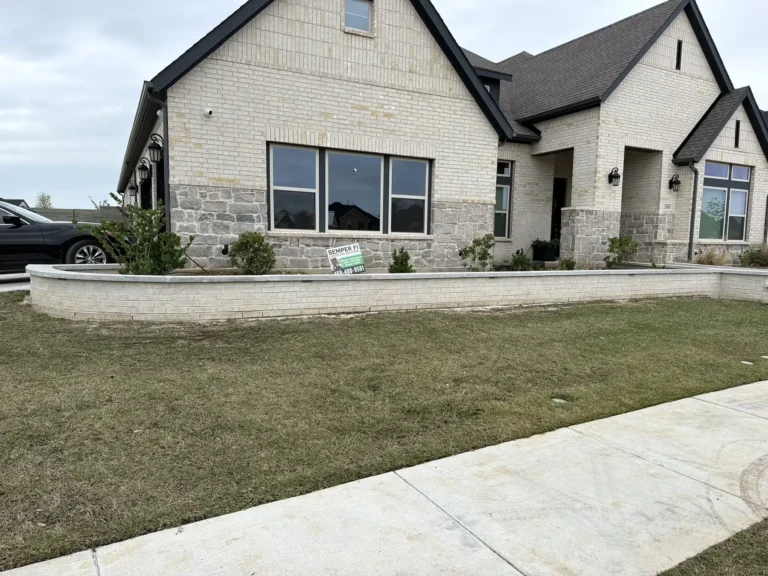
Retaining walls. Structural first, attractive second. Walls fail because of drainage behind them and inadequate base beneath them, not because of the block. Anything over four feet from the bottom of the footing, or holding a surcharge, needs engineering and a permit, and we will tell you that before you are committed rather than after.
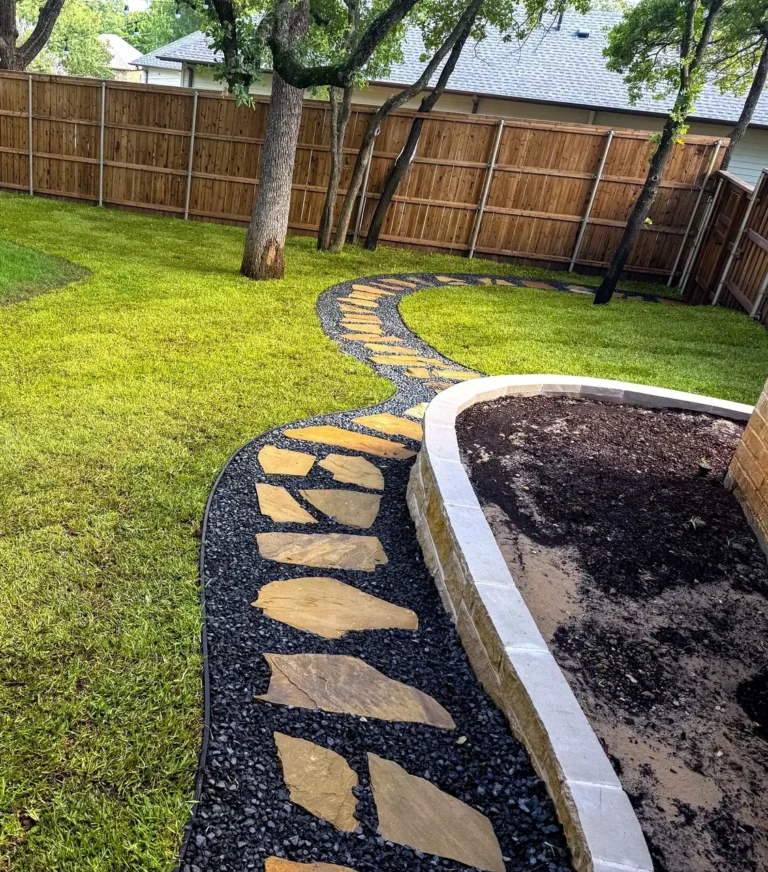
Walkways and steps. The connective work that makes a property feel resolved rather than assembled.
Fire pits and fire features. From a built-in seating-wall pit to a full outdoor fireplace.
Outdoor kitchens. Worth knowing that masonry bids commonly exclude the appliances, the gas line and the electrical. We itemise those rather than letting them surface later.
Seating walls and borders. Frequently the thing that turns a patio into a space people actually use.
Drainage is part of hardscape, not separate from it
Every square foot of patio is a square foot that no longer absorbs water. On a lot that already drains slowly, adding several hundred square feet of impermeable surface without planning where that water goes creates a problem where there was not one.
That is why our hardscape scopes include drainage integration. It is the single most commonly omitted item on a competitor’s bid and the most common cause of a callback.
Permits and the four-foot rule
The retaining wall rule catches people out constantly, so here it is plainly:
Walls under four feet generally do not need a permit.
Walls over four feet need a permit and a design by a licensed professional engineer, and the four feet is measured from the bottom of the footing, not from the ground you can see. A wall that looks three feet tall may legally be over five.
Any wall holding a surcharge, a slope, a driveway, a patio, a structure, needs a permit regardless of height.
Requirements differ between Denton County municipalities and they change. We confirm for your address as part of scoping.
Access, honestly
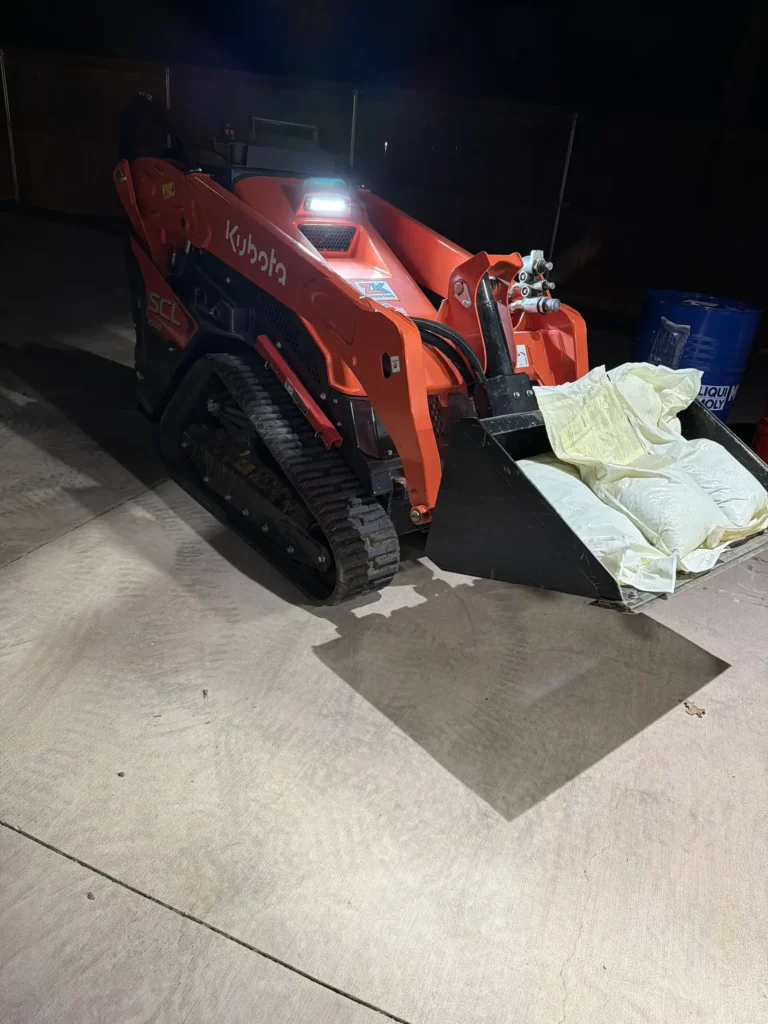
Base material is heavy and there is a lot of it. If a skid steer and dump trailer can reach your back yard, the job is efficient. If everything has to come through a thirty-six-inch gate by wheelbarrow, it is not, and the price reflects that. We would rather show you that line on the estimate than bury it.
What this usually costs
Patios and hardscape
$15 to $30 per square foot
Concrete pavers in a simple rectangular layout sit low. Natural stone with curves, steps, seating walls and integrated drainage sits high. Outdoor kitchens are quoted separately.
This is a starting reference, not a quote. Pricing is case by case because every property is different. Grade, soil, access, lot size and what is already in the ground all move the number, and the only way to get a real one is an on-site look. That visit is free.
We publish an honest cost guide for this service: real North Texas market ranges, what the low end actually buys you, and what pushes a number up. No sign-up, no email gate.
In this soil, pavers, for a functional reason rather than an aesthetic one. A monolithic concrete slab is rigid, and Blackland clay moves, so eventually it cracks, and a cracked slab stays cracked. A segmental paver surface flexes with ground movement, and if a section does settle, individual units can be lifted and reset. Concrete is genuinely less expensive up front, roughly half. That is the real trade-off, and we will lay it out rather than steering you.
Why is one patio bid so much lower?
Almost always base. Base depth, compaction and whether a geotextile separation layer was included are invisible once the pavers are down, and they are the entire difference between a patio that is flat in ten years and one that is not. Ask every bidder for base depth in inches and whether fabric is included. The bid that will not answer is the bid you now understand.
Do I need a permit for a retaining wall?
It depends on height and what the wall is holding. As a general rule across Texas municipalities, walls under four feet do not require a permit, but a wall over four feet measured from the bottom of the footing, not from the visible face, which is the part people get wrong: needs a permit and an engineered design. Critically, any wall supporting a surcharge, meaning a slope, driveway, patio or structure above it, needs a permit regardless of height. Requirements vary by city and we confirm for yours before we start.
What does a patio do to my drainage?
It changes it, which is the most commonly ignored part of a hardscape bid. You are adding an impermeable surface, so water that used to soak in now runs somewhere. Where it runs needs to be designed, not discovered. Drainage integration belongs in the quote; if it is missing from a bid, that is not a saving.
Can you build over my septic field?
No. On acreage properties in Argyle, Double Oak and unincorporated Denton County that are on septic, the drain field constrains where hardscape can go. We locate it before designing rather than after.
How long does a patio take?
A straightforward paver patio is typically several days to a week depending on size and access. Add retaining walls, steps, an outdoor kitchen or drainage work and it extends from there. Access matters more than people expect: if every ton of base has to come through a gate by wheelbarrow rather than by skid steer, that changes the schedule.
Reviews
What Customers Say About This Work
Justin repaired our flagstone walk and used utmost care and precision to keep the same pattern and look. A skilled stone professional!
Justin replied
Thanks so much for your kind words! Our team takes pride in delivering precise, careful work every time. Count on us if you need any help in the future. It was a pleasure working with you.
Justin was fair, transparent, on-time, and a great communicator. He spent time figuring out the mapping of my sprinkler…
Justin replied
Matt, thank you for trusting in us. Thank you for your service to our Country. From one Marine to another Semper Fi!
Justin and his team helped me out while on vacation. Great communication, fast service, and competitive pricing. Local small business! Thanks guys
Justin replied
Thank you Cory for trusting in us. We are here to help anytime you need us.